
Shoulder pain can make even simple activities like lifting a bag, reaching overhead or playing your favourite sport uncomfortable. Sometimes, the problem is not related to the muscles or tendons but to a deeper structure inside the shoulder joint called the labrum.
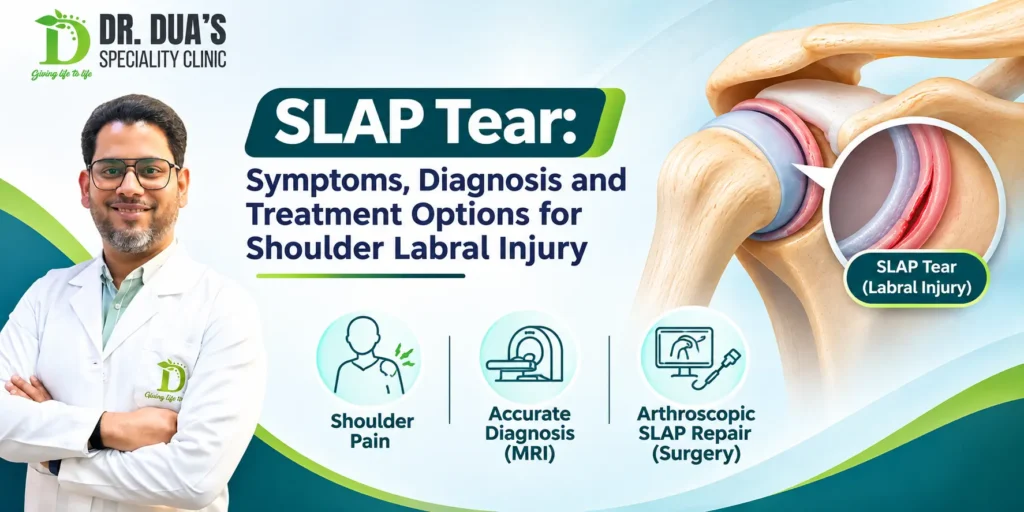
A SLAP tear is a type of shoulder labral injury that affects the upper part of the labrum, where the biceps tendon attaches. It is commonly seen in people who perform repetitive overhead movements, including athletes, swimmers, tennis players and gym enthusiasts.
Understanding the condition early can help prevent persistent discomfort and movement limitations. If you are experiencing ongoing shoulder pain, exploring SLAP tear treatment in Delhi with an experienced orthopaedic specialist can help identify the cause and appropriate treatment options.
What Is a SLAP Tear in the Shoulder?
SLAP stands for Superior Labrum Anterior to Posterior. It describes an injury to the upper portion of the shoulder labrum, extending from the front to the back of the biceps tendon attachment.
The labrum is a ring of strong, cartilage-like tissue surrounding the shoulder socket. It helps deepen the socket, improve joint stability and provide an attachment point for ligaments and the biceps tendon.
When this tissue becomes damaged or detached, it can cause pain, clicking sensations and difficulty performing certain shoulder movements.
A SLAP lesion shoulder injury may develop suddenly following an accident or gradually due to repetitive overhead activities.
What Causes a SLAP Tear?
A SLAP tear can occur because of a sudden injury or repeated stress on the shoulder joint.
Common causes include:
- Repetitive overhead movements: Activities such as swimming, tennis, cricket and throwing can put repeated stress on the upper labrum.
- Weightlifting: Heavy lifting, particularly overhead exercises, may increase stress on the shoulder structures.
- Falls: Landing on an outstretched arm can cause injury to the labrum.
- Sudden pulling injuries: Forcefully pulling or catching a heavy object can damage the biceps-labrum attachment.
- Age-related changes: The labrum may gradually wear down with age, sometimes producing degenerative changes.
People with overhead athlete shoulder pain should not automatically assume it is a muscle strain. Persistent symptoms may require an assessment of the shoulder joint and its supporting structures.
What Are the Common Symptoms of a SLAP Tear?
Symptoms can vary depending on the type and severity of the tear. Some people experience discomfort during physical activity, while others notice pain during routine movements.
Common symptoms include:
- Deep pain inside the shoulder, particularly during overhead movements.
- Clicking, popping or catching sensations when moving the arm.
- Reduced shoulder strength.
- Difficulty lifting or rotating the arm.
- Pain during throwing, swimming or weightlifting.
- Discomfort when performing repetitive shoulder movements.
- Reduced sports performance due to shoulder pain.
Not every clicking shoulder indicates a SLAP tear. However, persistent pain, weakness or restricted movement should be evaluated by an orthopaedic specialist.
How Is a SLAP Tear Diagnosed?
An accurate diagnosis is important because SLAP tears can produce symptoms similar to rotator cuff injuries, shoulder impingement and other labral problems.
A shoulder surgeon in South Delhi may recommend the following assessments:
1. Medical History and Physical Examination
The doctor discusses your symptoms, previous injuries, sports activities and daily movement difficulties.
Specific shoulder examination tests may help identify pain patterns and assess joint function. However, no single physical test confirms every SLAP tear.
2. X-rays
X-rays help identify bone-related problems, fractures and arthritis. Since the labrum is soft tissue, a standard X-ray cannot directly show a SLAP tear.
3. MRI Scan
An MRI helps examine the labrum, biceps tendon, rotator cuff and surrounding soft tissues.
In selected cases, an MRI arthrogram may be recommended. This scan uses contrast material inside the joint to improve visualisation of certain labral injuries.
Importantly, imaging findings must be interpreted alongside symptoms and clinical examination because some labral changes can occur naturally with ageing.
What Are the Treatment Options for a SLAP Tear?
Treatment depends on the tear pattern, patient age, activity level, biceps tendon involvement and severity of symptoms.
Not every patient needs surgery. Many people initially improve with appropriate non-surgical treatment.
1. Non-Surgical Treatment
Conservative treatment is generally the first approach for many SLAP injuries.
It may include:
- Activity modification: Temporarily avoiding movements that increase shoulder pain.
- Medication: Prescribed anti-inflammatory medicines may help manage pain and inflammation.
- Physiotherapy: Targeted exercises improve shoulder flexibility, rotator cuff strength and shoulder blade control.
- Rehabilitation: A structured exercise programme helps gradually restore shoulder movement and function.
A rehabilitation programme may continue for three to six months, depending on the patient’s symptoms and progress.
2. Arthroscopic SLAP Repair Surgery
If symptoms continue despite appropriate non-surgical treatment, surgery may be considered.
SLAP repair surgery is commonly performed using shoulder arthroscopy, a minimally invasive technique that uses a small camera and specialised instruments.
During arthroscopic repair:
- Small incisions are made around the shoulder.
- An arthroscope is inserted to examine the joint.
- The surgeon identifies the damaged labrum and evaluates the biceps tendon attachment.
- Specialised suture anchors may be used to reattach the torn labrum to the shoulder socket.
- The incisions are closed, and a rehabilitation plan is initiated.
However, SLAP repair is not suitable for every patient. Depending on age, tear type and biceps tendon condition, the surgeon may recommend trimming damaged tissue (debridement) or a biceps tenodesis instead.
The appropriate procedure is decided after a detailed assessment.
What Is the Recovery Time After SLAP Repair Surgery?
Recovery after SLAP repair surgery is gradual and depends on the extent of the injury and the surgical procedure performed.
Generally, rehabilitation involves:
- Initial recovery: The shoulder may be protected in a sling as advised by the surgeon.
- Early rehabilitation: Controlled passive and assisted movements are introduced according to the repair protocol.
- Strengthening phase: Progressive exercises help restore shoulder strength and stability.
- Return to sports: Sport-specific activities are gradually introduced after adequate healing and functional recovery.
Throwing athletes may require additional rehabilitation before returning to high-level overhead activities. Returning to sports too early can place unnecessary stress on the healing shoulder.
When Should You Consult a SLAP Repair Surgeon in Delhi?
Persistent shoulder pain should not be ignored, particularly if it affects your work, exercise or sports activities.
Consider consulting an orthopaedic shoulder specialist if:
- You experience recurring shoulder pain during overhead activities.
- Your shoulder makes painful clicking or catching sounds.
- You notice weakness while lifting or rotating your arm.
- Physiotherapy has not sufficiently improved your symptoms.
- Shoulder pain is affecting your sports performance or everyday activities.
Early evaluation can help distinguish a SLAP tear from other shoulder conditions and guide appropriate treatment.
SLAP Tear Treatment in Delhi at Dr. Apoorv Dua’s Speciality Clinic
Finding the right treatment begins with understanding the actual cause of shoulder pain.
Dr. Apoorv Dua, an orthopaedic surgeon with an IOA Inland Fellowship in Shoulder Arthroscopy and Sports Medicine from Ganga Hospital, provides evaluation and treatment for shoulder conditions, including labral injuries, rotator cuff tears and other sports-related shoulder problems.
At Dr. Dua’s Speciality Clinic in Greater Kailash II, New Delhi, treatment planning considers the patient’s symptoms, physical examination, imaging findings and activity requirements.
Patients looking for a SLAP repair surgeon in Delhi can consult Dr. Apoorv Dua to understand available non-surgical and arthroscopic treatment options.
Learn more about Shoulder Pain Treatment at Dr. Apoorv Dua’s Speciality Clinic.
Frequently Asked Questions (FAQs)
1. Can a SLAP tear heal without surgery?
Many patients improve with activity modification, medication and physiotherapy. Surgery may be considered when symptoms persist despite appropriate conservative treatment.
2. Is a SLAP tear a serious shoulder injury?
Its seriousness depends on the extent of labral damage and whether the biceps tendon or other shoulder structures are involved. Persistent symptoms should be evaluated by a specialist.
3. Can gym workouts cause a SLAP tear?
Repeated overhead lifting, heavy weightlifting and certain shoulder exercises may place stress on the labrum. Incorrect technique and sudden loading can also contribute to shoulder injuries.
4. How is a SLAP tear different from a rotator cuff tear?
A SLAP tear affects the upper shoulder labrum near the biceps tendon attachment, whereas a rotator cuff tear involves damage to one or more tendons responsible for shoulder movement and stability.
5. How long does recovery take after SLAP repair surgery?
Recovery takes several months and varies depending on the type of repair, healing and rehabilitation progress. Overhead athletes may require additional time before returning to competitive sports.
6. Which doctor should I consult for SLAP tear treatment in Delhi?
An orthopaedic surgeon experienced in shoulder arthroscopy and sports injuries can evaluate the condition and recommend suitable treatment based on clinical findings and imaging.
Conclusion
A SLAP tear can affect shoulder strength, movement and sports performance, particularly in people who regularly perform overhead activities. Recognising the symptoms and getting an accurate diagnosis are important steps towards appropriate treatment. Whether the condition requires physiotherapy or arthroscopic SLAP repair, the treatment approach should be based on individual needs. If persistent shoulder pain is affecting your daily routine, consult Dr. Apoorv Dua in Greater Kailash, Delhi, to explore suitable treatment options and work towards better shoulder function
