
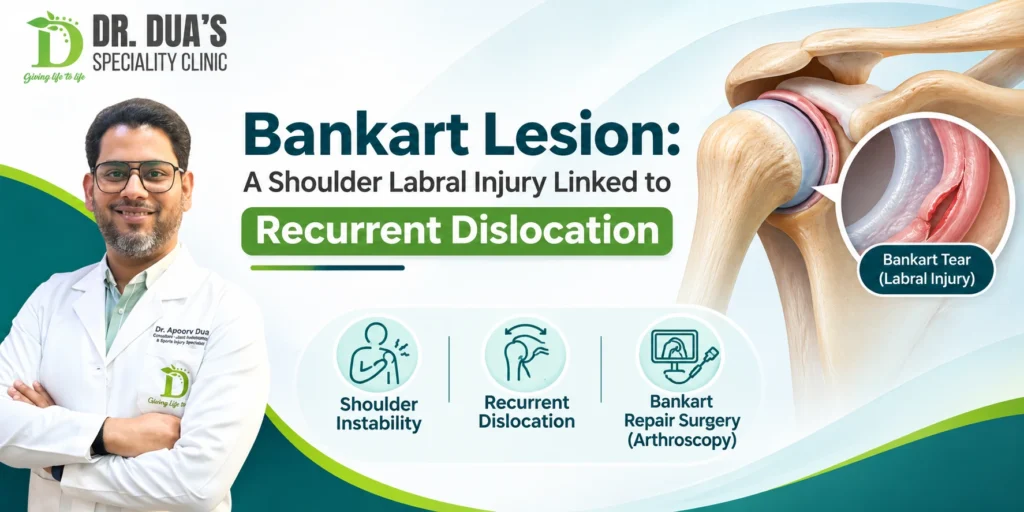
A shoulder dislocation can be painful, but repeated dislocations may indicate an underlying injury inside the shoulder joint. One common cause is a Bankart lesion, an injury involving the labrum, which helps keep the shoulder stable.
This injury often occurs after an anterior shoulder dislocation, when the upper arm bone moves forward out of the shoulder socket. The impact can damage the cartilage-like tissue around the socket, making the shoulder more vulnerable to future dislocations.
People experiencing repeated shoulder instability may need a detailed assessment to understand the extent of the injury. With appropriate Bankart lesion treatment in Delhi, patients can explore suitable options, including physiotherapy and arthroscopic repair, depending on their condition.
What Is a Bankart Lesion?
A Bankart lesion is an injury to the anteroinferior (front and lower) part of the shoulder labrum. The labrum is a ring of strong, cartilage-like tissue surrounding the shoulder socket, also known as the glenoid.
Its main function is to deepen the socket and help stabilise the shoulder joint.
When the shoulder dislocates forward, the labrum may become detached from the edge of the socket. This injury is called a Bankart tear shoulder.
As the damaged labrum loses its ability to support the joint properly, the shoulder may become unstable. Some patients experience repeated dislocations, while others notice that their shoulder feels loose or may slip out of place during certain movements.
What Causes a Bankart Tear in the Shoulder?
A Bankart lesion commonly develops following an anterior shoulder dislocation. It can happen during sports, accidents or activities involving sudden shoulder movement.
Common causes include:
- Sports injuries: Contact sports such as football, rugby and wrestling can cause sudden shoulder trauma.
- Falls: Landing on an outstretched arm may force the shoulder out of its normal position.
- Road accidents: A sudden impact can damage the shoulder joint and surrounding tissues.
- Sudden twisting movements: Forceful arm rotation or movement away from the body can increase the risk of dislocation.
- Previous shoulder dislocation: Repeated dislocations can further damage the labrum and supporting structures.
Young and physically active individuals may be particularly affected because of their participation in high-impact sports and activities.
What Are the Symptoms of a Bankart Lesion?
Symptoms can vary depending on the severity of the injury and whether the shoulder has dislocated previously.
Common symptoms include:
- Repeated shoulder dislocations or partial dislocations.
- A feeling that the shoulder may slip out of its socket.
- Pain during overhead activities.
- Reduced confidence when moving the arm.
- Shoulder weakness or discomfort.
- Difficulty participating in sports or lifting objects.
- A feeling of instability during certain arm movements.
One important sign is recurrent shoulder dislocation. If your shoulder repeatedly slips out of place, the underlying labrum and other stabilising structures may need evaluation.
How Is a Bankart Lesion Diagnosed?
An accurate diagnosis helps determine the extent of the injury and the most appropriate treatment.
A shoulder dislocation specialist in Delhi may recommend the following assessments:
1. Physical Examination
The doctor reviews your injury history and examines shoulder movement, strength and stability. Specific clinical tests may help identify signs of instability.
2. X-rays
X-rays help identify dislocation-related bone injuries and assess the position of the shoulder joint. They may also reveal bone defects around the shoulder socket.
3. MRI Scan
An MRI helps evaluate soft tissues, including the labrum, ligaments and rotator cuff. It can help identify a Bankart lesion and associated injuries.
4. CT Scan
A CT scan may be recommended when the doctor needs a more detailed assessment of bone loss involving the shoulder socket or upper arm bone.
The final diagnosis is based on the patient’s symptoms, physical examination and imaging findings.
What Are the Treatment Options for a Bankart Lesion?
Treatment depends on the severity of the tear, the number of dislocation episodes, bone damage, activity level and overall shoulder stability.
Not every Bankart lesion requires surgery. A specialist evaluates these factors before recommending treatment.
1. Non-Surgical Treatment
For selected patients, conservative treatment may help manage symptoms and improve shoulder stability.
It may include:
- Activity modification: Avoiding movements and activities that trigger instability.
- Medication: Prescribed medicines may help manage pain and inflammation.
- Shoulder support: A sling may be recommended for a limited period following an acute dislocation.
- Physiotherapy: Guided exercises help improve shoulder muscle strength, movement control and joint stability.
Physiotherapy may be suitable for patients with less severe instability or those who do not require surgical treatment.
2. Bankart Repair Surgery
When shoulder instability continues despite appropriate non-surgical care, or repeated dislocations indicate significant structural damage, surgery may be considered.
Bankart repair surgery aims to reattach the detached labrum to the shoulder socket and restore the supporting structures.
The procedure is commonly performed using shoulder arthroscopy.
During arthroscopic Bankart repair:
- The surgeon makes small incisions around the shoulder.
- A small camera (arthroscope) is inserted to examine the joint.
- Specialised instruments are used to prepare the damaged labral area.
- Small suture anchors are placed in the shoulder socket.
- The detached labrum and supporting tissue are secured back to the bone.
The procedure aims to improve shoulder stability and reduce the risk of further dislocations.
However, arthroscopic repair is not appropriate for every patient. Significant bone loss or other associated injuries may require a different surgical approach.
What Is the Recovery Time After Bankart Repair Surgery?
Recovery after Bankart repair surgery takes time and requires a structured rehabilitation programme.
The exact timeline varies according to the injury, surgical technique and individual healing.
Generally, recovery involves:
- Initial weeks: The shoulder is protected using a sling as advised by the surgeon.
- Early rehabilitation: Guided passive and assisted movements are introduced according to the repair and rehabilitation protocol.
- Strengthening phase: Progressive exercises help restore muscle strength and shoulder control.
- Return to activities: Daily activities, exercise and sports are gradually resumed when the shoulder has recovered sufficiently.
Returning to contact sports or heavy lifting too early may put unnecessary stress on the repair.
Your surgeon and physiotherapist will guide your progress based on movement, strength, stability and functional recovery.
When Should You Consult a Shoulder Specialist in Delhi?
Do not ignore repeated shoulder dislocations or a persistent feeling of instability.
Consider consulting an orthopaedic specialist if:
- Your shoulder has dislocated more than once.
- You experience instability during everyday activities.
- Shoulder pain continues after an injury.
- You find it difficult to raise or rotate your arm.
- You cannot return to sports because of shoulder instability.
An early assessment can help identify labral damage, associated bone injuries and suitable treatment options.
Bankart Lesion Treatment in Delhi at Dr. Apoorv Dua’s Speciality Clinic
Choosing the right treatment starts with an accurate diagnosis and an understanding of your shoulder condition.
Dr. Apoorv Dua, an orthopaedic surgeon with an IOA fellowship in Shoulder Arthroscopy and Sports Medicine from Ganga Hospital, provides evaluation and treatment for various shoulder conditions, including labral injuries, shoulder instability and rotator cuff problems.
At Dr. Dua’s Speciality Clinic in Greater Kailash II, New Delhi, treatment planning focuses on the patient’s symptoms, clinical findings, imaging reports and activity requirements.
Whether you need conservative management or an assessment for arthroscopic treatment, an individualised approach helps determine the next appropriate step.
For patients looking for a shoulder arthroscopy surgeon in Greater Kailash, consulting an experienced orthopaedic specialist can help clarify the available treatment options.
Explore the Shoulder Pain Treatment services at Dr. Apoorv Dua’s Speciality Clinic to learn more.
Frequently Asked Questions (FAQs)
1. Can a Bankart lesion heal without surgery?
Some patients can manage symptoms and improve shoulder stability with activity modification and physiotherapy. However, patients with repeated dislocations or significant structural damage may require surgical evaluation.
2. Is Bankart repair surgery necessary for every shoulder dislocation?
No. A single shoulder dislocation does not automatically mean surgery is necessary. The decision depends on age, activity level, instability, labral damage and associated bone injuries.
3. How serious is a Bankart lesion?
A Bankart lesion can lead to recurrent shoulder instability if the damaged structures do not provide adequate support. Its severity depends on the extent of labral damage and any associated bone injury.
4. How long does it take to recover from Bankart repair surgery?
Recovery generally takes several months. The timeline depends on healing, rehabilitation progress and the physical demands of the patient’s daily activities or sport.
5. Can I play sports after Bankart repair surgery?
Many patients can return to sports after appropriate rehabilitation. However, returning to activity depends on shoulder strength, stability, movement control and the surgeon’s clearance.
6. Which doctor should I consult for recurrent shoulder dislocation in Delhi?
Consult an orthopaedic surgeon experienced in shoulder injuries and arthroscopy. A specialist can assess the labrum, shoulder stability and associated bone damage before recommending treatment.
7. Is Bankart repair performed through arthroscopy?
Yes. Arthroscopic Bankart repair is a commonly used technique. It involves small incisions, a camera and specialised instruments to reattach the damaged labrum using suture anchors.
Conclusion
A Bankart lesion can cause ongoing shoulder instability and recurrent dislocations if left unaddressed. Early diagnosis and the right treatment approach can help restore shoulder stability and support a safe return to daily activities and sports. If you are experiencing repeated shoulder dislocations, consult Dr. Apoorv Dua, an experienced orthopaedic surgeon in Delhi, to understand suitable treatment options, including arthroscopic Bankart repair when required.
