
Joint pain can change your daily life very quickly. One day you feel mild discomfort, and soon walking, sitting, or climbing stairs becomes difficult. Many patients assume all joint pain is arthritis—but that is not always true. In some cases, the real cause may be Avascular Necrosis, a condition that needs early attention.
Understanding the difference between Avascular Necrosis and arthritis is important because the treatment approach, recovery, and long-term outcome can be very different. This blog explains both conditions in simple language so patients can make informed decisions and seek the right medical care at the right time.
What Is Avascular Necrosis?
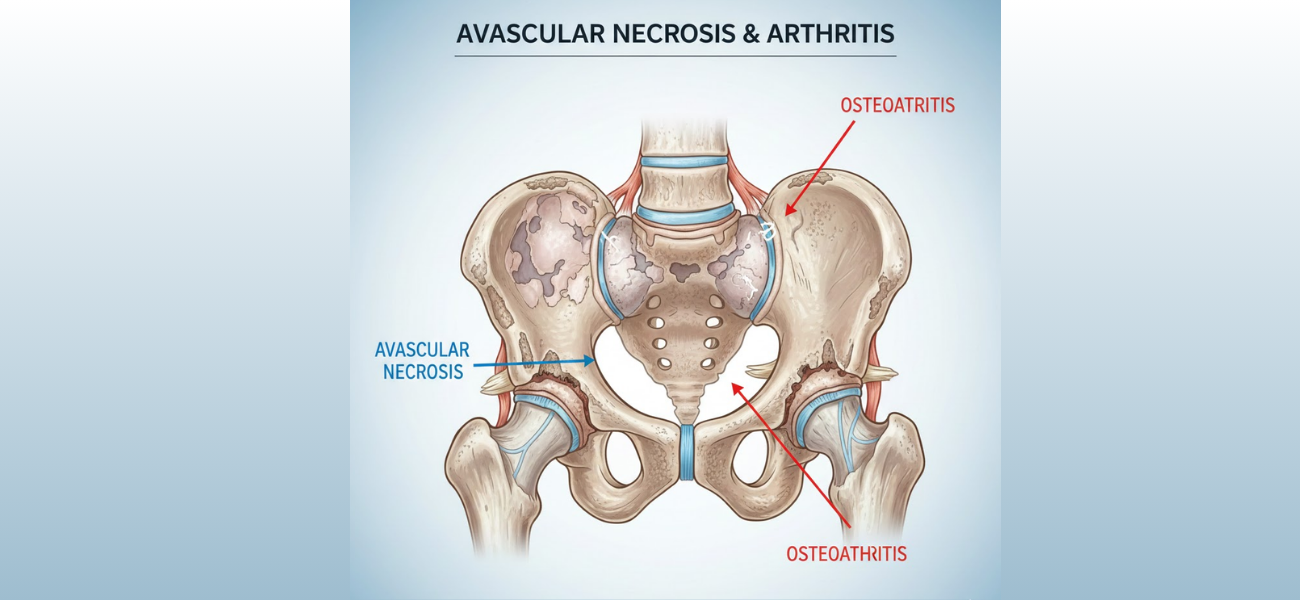
Avascular Necrosis (AVN) is a condition where blood supply to a bone is reduced or completely blocked. When bone tissue does not receive enough blood, it slowly weakens and may collapse over time.
AVN most commonly affects:
- Hip joint
- Knee
- Shoulder
- Ankle
The hip is the most frequently involved joint and is often where symptoms first become noticeable.
Common Causes of Avascular Necrosis
- Long-term or high-dose steroid use
- Excessive alcohol consumption
- Previous joint injury or trauma
- Certain medical conditions affecting blood flow
- Idiopathic causes (no clear reason in some patients)
AVN often develops silently and may not show symptoms in the early stages.
What Is Arthritis?
Arthritis refers to inflammation and gradual wear of a joint. It develops slowly and is more commonly related to age, repetitive stress, or joint degeneration.
The most common types include:
- Osteoarthritis
- Rheumatoid arthritis
- Post-traumatic arthritis
Unlike AVN, arthritis is usually a progressive, long-term condition that worsens over years.
Common Causes of Arthritis
- Age-related joint wear
- Previous joint injuries
- Obesity and excess joint load
- Autoimmune conditions
- Genetic predisposition
Why Avascular Necrosis and Arthritis Are Often Confused
Both conditions cause:
- Joint pain
- Stiffness
- Difficulty walking
- Reduced range of motion
Because symptoms overlap, many patients delay proper diagnosis. This delay can be harmful, especially in Avascular Necrosis, where early treatment can help preserve the joint.
Key Differences Between Avascular Necrosis and Arthritis
1. Cause of the Problem
- Avascular Necrosis: Loss of blood supply to bone
- Arthritis: Degeneration or inflammation of joint cartilage
2. Age Group Affected
- AVN: Often affects younger adults (30–50 years)
- Arthritis: More common after 50 years
3. Speed of Progression
- AVN: Can worsen rapidly if untreated
- Arthritis: Progresses slowly over years
4. Pain Pattern
- AVN: Deep pain, often worse at rest or at night
- Arthritis: Pain increases with movement and activity
5. Imaging Findings
- AVN: Early X-rays may appear normal; MRI is crucial
- Arthritis: X-rays often show joint space narrowing and bone changes
Symptoms Patients Should Not Ignore
Symptoms of Avascular Necrosis
- Deep joint pain without clear injury
- Pain that worsens over weeks or months
- Difficulty bearing weight
- Reduced joint movement
- Pain even while resting
Symptoms of Arthritis
- Morning stiffness
- Pain during movement
- Swelling around the joint
- Gradual loss of flexibility
- Grinding or cracking sensation
If joint pain persists for more than a few weeks, medical evaluation is essential.
How Doctors Diagnose These Conditions
Medical History and Physical Examination
Doctors assess pain pattern, mobility, risk factors, and daily limitations.
Imaging Tests
- X-ray: Useful for arthritis and advanced AVN
- MRI: Gold standard for early detection of Avascular Necrosis
Early MRI can identify AVN before permanent damage occurs.
Avascular Necrosis and Arthritis Treatment: What Patients Should Know
Avascular necrosis and arthritis treatment depends on disease stage, joint involved, and patient lifestyle.
Treatment Options for Avascular Necrosis
- Activity modification
- Medications for pain control
- Reduced weight bearing
- Early surgical procedures to preserve bone structure
- Joint replacement in advanced stages
Early diagnosis can help delay or avoid major surgery.
Treatment Options for Arthritis
- Lifestyle changes and weight management
- Pain-relief medications
- Physiotherapy and joint strengthening
- Injections (in selected cases)
- Joint replacement when conservative methods fail
Each patient requires an individualized treatment plan.
Why Early Diagnosis Makes a Big Difference
In Avascular Necrosis, early detection may:
- Slow disease progression
- Preserve natural joint structure
- Improve long-term mobility
In arthritis, early care helps:
- Reduce pain
- Maintain function
- Delay joint replacement
Ignoring symptoms often leads to limited treatment options later.
When Should You Consult a Specialist?
You should seek medical advice if:
- Joint pain persists beyond 2–3 weeks
- Pain occurs even at rest
- Movement becomes restricted
- Walking or daily tasks feel difficult
- Pain increases despite basic care
Consulting an experienced Avascular Necrosis and arthritis doctor in Delhi can help ensure accurate diagnosis and timely management.
Living With Joint Pain: Practical Tips for Patients
- Avoid overloading painful joints
- Maintain healthy body weight
- Follow prescribed activity modifications
- Do not self-medicate steroids
- Attend follow-up appointments regularly
Small lifestyle adjustments can significantly improve joint health.
Can Avascular Necrosis and Arthritis Be Prevented?
Not all cases can be prevented, but risk can be reduced by:
- Using steroids only under medical supervision
- Limiting alcohol intake
- Managing chronic health conditions
- Seeking early evaluation for unexplained joint pain
Awareness plays a key role in prevention.
Meet Dr. Apoorv Dua: Orthopedic Consultation for Joint Pain
If you are looking for medical evaluation for hip/knee joint pain and guidance on imaging and treatment planning, you may consider consulting Dr. Apoorv Dua, an Orthopedic Surgeon who sees patients for bone and joint conditions, including concerns related to AVN and arthritis.
In a typical consultation, patients can expect:
- Symptom review and physical examination
- Guidance on whether X-ray is enough or MRI is needed
- Discussion of likely diagnosis and stage-based treatment options
- A follow-up plan focused on pain control and function (movement, walking comfort, daily activity)
(Keep in mind: the right approach depends on your symptoms and imaging findings.)
Final Thoughts
Joint pain should never be ignored or assumed to be “just arthritis.” Avascular Necrosis and arthritis may look similar on the surface, but their causes, progression, and treatment paths are very different. Early diagnosis and proper guidance can protect joint function and quality of life.
If symptoms persist or worsen, consulting a qualified Avascular Necrosis and arthritis doctor in Delhi can help you understand the problem clearly and choose the most appropriate care.
Understanding your joint pain today can prevent major problems tomorrow.
