

Excess Weight & Joint Pain: Why Your Knees Hurt and How to Protect Your Joints Naturally
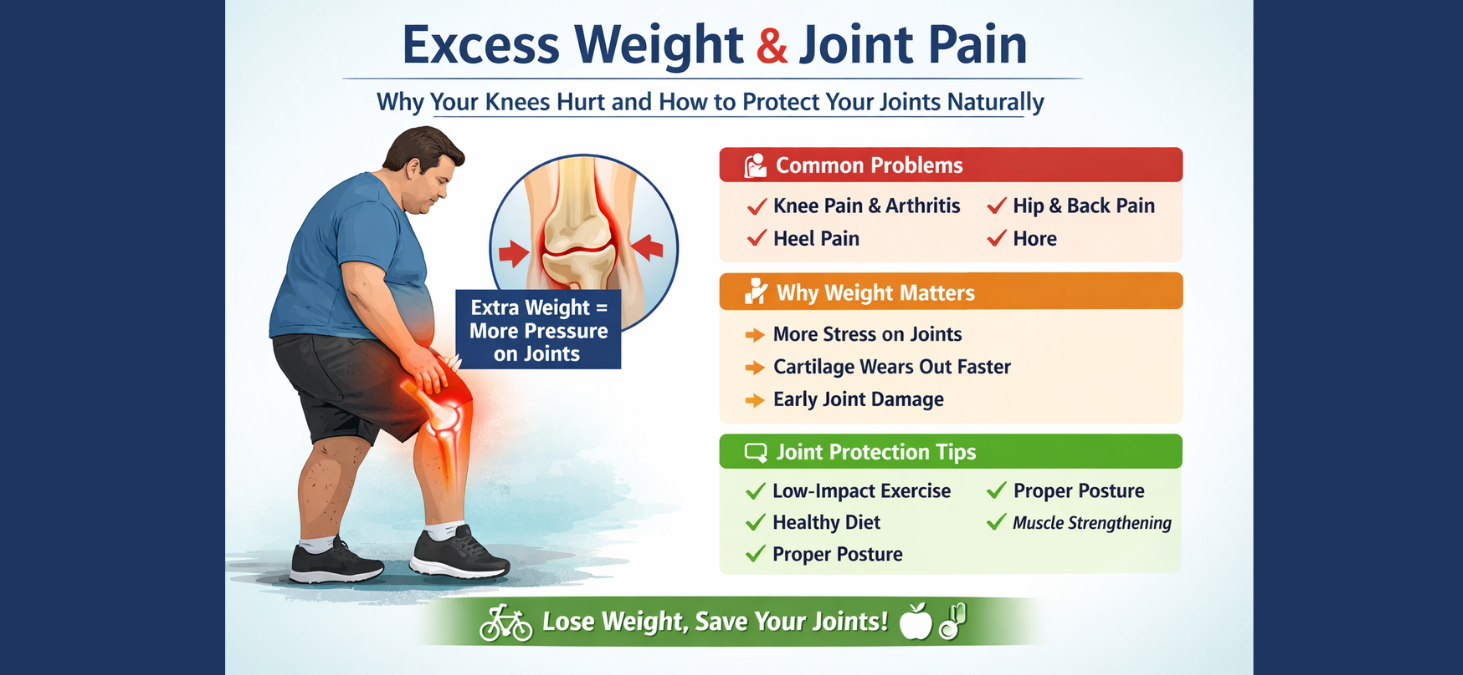
Joint pain is no longer a problem limited to old age. Today, many young and middle-aged people experience knee pain, stiffness, and difficulty in movement—and one of the biggest reasons is excess body weight.
In this blog, we explain how extra weight affects your joints, why the knees suffer the most, and step-by-step ways to protect your joints naturally.
Understand How Body Weight Affects Your Joints
Your joints act like shock absorbers for your body.
When body weight increases, joints must carry more pressure than they are designed for.
- Every 1 kg of extra body weight adds 3–4 kg of pressure on the knees
- Knees, hips, ankles, and lower back are affected first
- Over time, joint cartilage wears down faster
This is why overweight individuals often experience joint pain earlier than expected.
Why the Knees Are Affected the Most
The knee joint carries most of your body weight during daily activities like:
- Walking
- Climbing stairs
- Standing for long hours
With excess weight:
- Knee cartilage breaks down faster
- Inflammation increases
- Pain and stiffness become common
If ignored, this can lead to early osteoarthritis.
Common Joint Problems Linked to Excess Weight
Being overweight increases the risk of several joint conditions, including:
- Knee osteoarthritis
- Chronic knee pain
- Hip joint pain
- Lower back pain
- Heel pain (plantar fasciitis)
These problems often start mild but worsen without lifestyle changes.
Why Weight Loss Is Essential for Joint Protection
Weight loss is one of the most effective natural treatments for joint pain.
Benefits of losing even 5–10% of body weight:
- Reduces stress on knee joints
- Improves flexibility and movement
- Decreases pain and swelling
- Slows down joint damage
In many cases, proper weight control can help avoid surgery.
Natural Ways to Protect Your Joints
1. Follow a Joint-Friendly Diet
- Eat protein-rich foods for muscle support
- Include calcium and vitamin D for bone strength
- Reduce sugar, fried food, and processed snacks
A healthy diet supports both weight loss and joint health.
2. Choose Low-Impact Exercises
Low-impact exercises strengthen joints without causing damage:
- Walking
- Swimming
- Cycling
- Physiotherapy-guided strengthening exercises
Avoid jumping, running on hard surfaces, or heavy squats if you have knee pain.
3. Improve Daily Posture and Habits
Small changes make a big difference:
- Avoid sitting cross-legged for long periods
- Use supportive footwear
- Maintain proper sitting and standing posture
- Take breaks if you sit for long hours
These habits reduce unnecessary joint stress.
4. Strengthen Muscles Around the Knee
Strong muscles protect your joints:
- Thigh and hip muscle strengthening improves knee stability
- Regular physiotherapy helps reduce pain and stiffness
Muscle support reduces joint load naturally.
When Should You Consult a Doctor?
You should seek medical advice if:
- Knee pain lasts more than 2–3 weeks
- Swelling or stiffness increases
- Walking becomes painful
- Pain keeps coming back
Early diagnosis helps prevent permanent joint damage.
Can Joint Pain Be Prevented?
Yes. Most weight-related joint problems are preventable with:
- Healthy weight management
- Regular low-impact activity
- Early medical guidance
Prevention is always easier than treatment.
Final Thoughts
Excess weight does not just affect your appearance—it puts continuous stress on your joints, especially your knees.
The good news is that simple lifestyle changes, weight control, and early care can protect your joints naturally.
Healthy weight means pain-free movement and better quality of life.
