

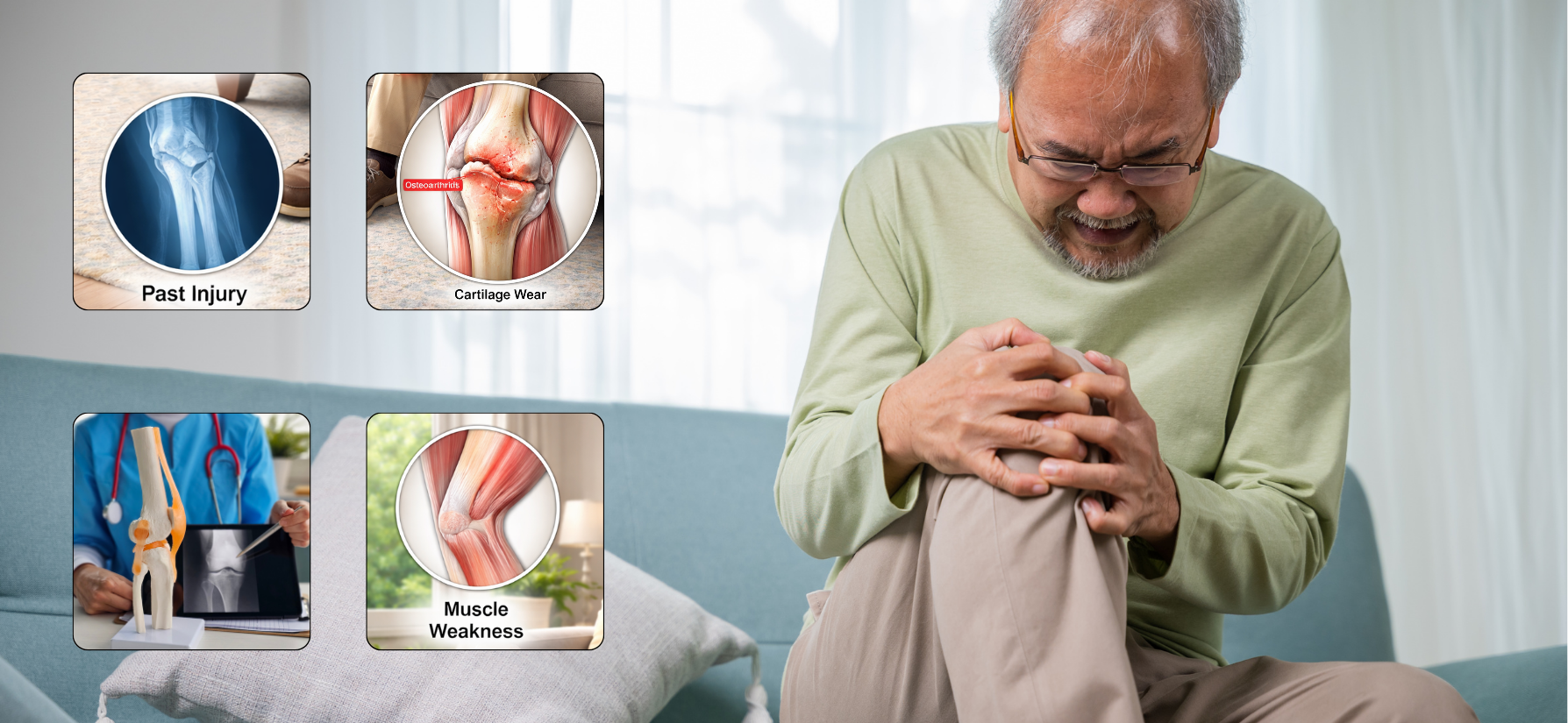
Many elderly people believe knee pain is just a “normal part of aging.” They ignore it, adjust their walking, or rely on painkillers—until the pain starts affecting daily life. But here’s the truth: knee pain in old age is common, but it is not something that should be ignored.
In many cases, knee pain is a sign of an underlying joint problem that can be managed or slowed down with timely care. Understanding the real reasons behind knee pain in elderly people helps families take the right steps before mobility and independence are affected.
Is Knee Pain in Old Age Really Normal?
Aging does bring natural wear and tear to the joints. However, constant knee pain, stiffness, or difficulty walking is not “normal”. These symptoms usually point to a condition that needs attention.
Some older adults have mild discomfort after long walks, which can be expected. But pain that:
- persists daily
- increases over time
- causes limping
- disturbs sleep
is a warning sign—not just aging.
Common Causes of Knee Pain in Elderly People
Let’s look at the most common medical reasons behind knee pain in old age.
1. Osteoarthritis (Most Common Cause)
Osteoarthritis is the leading cause of knee pain in elderly individuals. It happens when the protective cartilage in the knee joint slowly wears down.
Typical symptoms include:
- Pain during walking or standing
- Stiffness after rest or in the morning
- Swelling around the knee
- Grinding or clicking sounds
Osteoarthritis develops gradually and worsens if left unmanaged.
2. Weak Muscles and Reduced Joint Support
With age, muscle strength naturally decreases—especially in the thighs and hips. Weak muscles fail to support the knee joint properly, increasing stress on the joint surfaces.
This often leads to:
- Knee instability
- Pain while climbing stairs
- Fear of falling
Muscle weakness is a major but often overlooked cause of knee pain in elderly people.
3. Obesity or Weight Gain
Extra body weight puts additional pressure on the knees. Even a small increase in weight can significantly increase joint stress.
Studies show that:
- Each extra kilogram adds multiple kilograms of pressure on the knee joint
- Overweight elderly individuals experience faster cartilage wear
Weight-related knee pain is common but highly manageable with lifestyle changes.
4. Old Injuries or Untreated Trauma
Previous injuries—such as fractures, ligament tears, or meniscus damage—can lead to knee pain years later.
Many elderly patients say:
“I injured my knee years ago, but it was fine until now.”
Old injuries can accelerate joint degeneration if not properly treated.
5. Reduced Joint Lubrication and Flexibility
As we age:
- Joint fluid reduces
- Ligaments become stiff
- Flexibility decreases
This causes pain during movement and stiffness after sitting or sleeping.
6. Other Medical Conditions
Some additional causes of knee pain in elderly include:
- Rheumatoid arthritis
- Gout
- Osteoporosis-related changes
- Vitamin D deficiency
- Poor blood circulation
Each requires a different treatment approach, which is why proper diagnosis is important.
Signs That Knee Pain Should Not Be Ignored
Seek medical advice if knee pain:
- Lasts more than 2–3 weeks
- Increases instead of improving
- Causes swelling or redness
- Makes walking difficult
- Leads to frequent falls
- Requires daily painkillers
Early evaluation can prevent long-term damage.
How Knee Pain in Old Age Is Diagnosed
Doctors usually assess knee pain through:
- Medical history and symptom discussion
- Physical examination
- X-rays to check joint space and alignment
- Blood tests (if inflammation is suspected)
Early diagnosis helps in choosing the right treatment and avoiding unnecessary progression.
Knee Pain in Elderly: Treatment Options Explained Simply
Treatment depends on the cause and severity of pain. Most elderly patients do not need surgery immediately.
1. Lifestyle and Daily Habit Changes
Simple changes can make a big difference:
- Avoid sitting on the floor or squatting
- Use chairs with arm support
- Wear cushioned, supportive footwear
- Use walking aids if balance is poor
2. Physiotherapy and Exercise
Supervised exercises help:
- Strengthen thigh and hip muscles
- Improve knee stability
- Reduce pain and stiffness
Low-impact activities like walking, cycling, and swimming are usually safe.
3. Weight Management
Even modest weight reduction:
- Reduces knee pressure
- Improves mobility
- Slows arthritis progression
This is one of the most effective natural treatments for knee pain in old age.
4. Pain Management and Medications
Doctors may recommend:
- Short-term pain relief
- Anti-inflammatory measures
- Supplements if appropriate
Self-medication should be avoided in elderly patients.
5. Advanced Care (When Needed)
In advanced cases where pain severely affects daily life, doctors may discuss:
- Injection-based pain relief
- Joint preservation strategies
- Surgical options (only when conservative care fails)
Can Knee Pain in Old Age Be Prevented?
While aging cannot be stopped, knee pain in elderly people can often be delayed or reduced by:
- Staying physically active
- Maintaining healthy body weight
- Strengthening leg muscles
- Treating knee pain early
- Avoiding long-term misuse of painkillers
Prevention starts with awareness.
Meet Dr. Apoorv Dua: Orthopedic Care for Knee Pain
For elderly patients experiencing persistent knee pain, consulting an orthopedic specialist can help clarify the cause and guide appropriate care. Dr. Apoorv Dua, an Orthopedic Surgeon, evaluates knee pain in older adults with a focus on accurate diagnosis and functional improvement.
During a consultation, patients typically receive:
- Detailed assessment of knee symptoms
- Review of X-rays or investigations if needed
- Guidance on non-surgical management options
- Advice on activity modification and rehabilitation
A structured, step-by-step approach helps elderly patients stay mobile and independent for longer.
When Should Families Be Concerned?
Family members should encourage evaluation if an elderly person:
- Avoids walking due to knee pain
- Depends heavily on painkillers
- Has frequent falls
- Shows reduced confidence in movement
- Withdraws from daily activities
Knee pain affects not just mobility, but also mental well-being and independence.
Final Thoughts
So, is knee pain in old age normal?
Mild discomfort may occur with aging—but persistent knee pain in elderly people is a medical issue, not just aging.
The good news is that most causes of knee pain can be managed with early care, lifestyle changes, and proper guidance. Ignoring pain only leads to reduced mobility and quality of life.
Healthy knees support a healthy, active old age.
FAQs – Knee Pain in Old Age
1. Is knee pain common in elderly people?
Yes, knee pain is common, but it should not be considered normal or ignored.
2. What is the most common cause of knee pain in old age?
Osteoarthritis is the most common cause of knee pain in elderly individuals.
3. Can knee pain in elderly people improve without surgery?
Yes. Most cases improve with physiotherapy, weight management, and lifestyle changes.
4. When should an elderly person see a doctor for knee pain?
If pain lasts more than a few weeks, worsens, or affects walking, medical evaluation is recommended.
5. Does walking worsen knee pain in old age?
Proper walking and guided exercise usually help. Pain increases only when joints are overloaded or untreated.
6. Can knee pain be prevented in old age?
Yes, staying active, maintaining weight, and strengthening muscles can help prevent or delay knee pain.
