

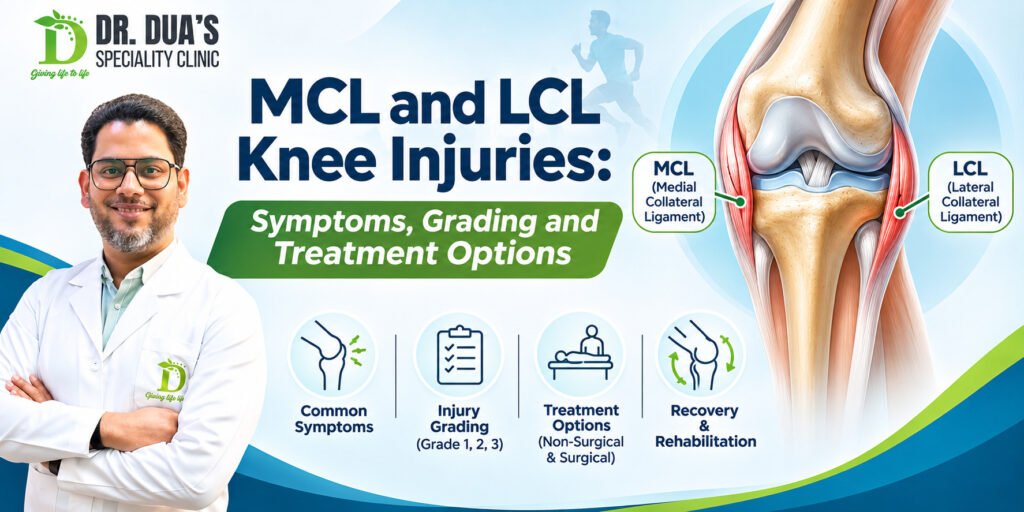
MCL and LCL Knee Injuries: Symptoms, Grading and Treatment Options
Knee injuries can happen during everyday activities, sports or sudden movements. Sometimes, a direct hit or an awkward twist can damage the ligaments that support the sides of the knee. Two commonly affected structures are the Medial Collateral Ligament (MCL) and Lateral Collateral Ligament (LCL).
These ligaments help maintain knee stability and control side-to-side movement. When they become stretched or torn, patients may experience pain, swelling and difficulty walking or participating in sports.
Understanding the injury early can help prevent further knee instability. With appropriate MCL LCL injury treatment in Delhi, patients can explore suitable options based on the severity of ligament damage and their activity requirements.
What Are MCL and LCL Knee Injuries?
The knee joint contains four major ligaments that help keep it stable during movement. The MCL and LCL are known as collateral ligaments because they are located on either side of the knee.
- Medial Collateral Ligament (MCL): Located on the inner side of the knee, it connects the thighbone (femur) to the shinbone (tibia). It helps prevent excessive inward movement of the knee.
- Lateral Collateral Ligament (LCL): Located on the outer side of the knee, it connects the thighbone to the smaller lower-leg bone (fibula). It helps protect the knee against excessive outward movement.
An injury to either ligament can affect knee stability. In some cases, collateral ligament injuries may occur alongside an ACL, PCL or meniscus injury.
What Causes MCL and LCL Knee Injuries?
Most collateral ligament injuries happen when excessive force pushes the knee sideways or causes it to bend unnaturally.
Common causes include:
- Sports injuries: Football, basketball, hockey and other contact sports can involve sudden impacts and direction changes.
- Direct impact: A blow to the outer side of the knee may injure the MCL, while impact to the inner side can damage the LCL.
- Sudden twisting: Rapid changes in direction while running can place excessive stress on knee ligaments.
- Falls and accidents: Landing awkwardly or experiencing a road accident can damage the supporting structures of the knee.
- Previous knee injuries: An earlier ligament injury may increase the risk of further instability.
What Are the Common MCL and LCL Injury Symptoms?
Symptoms depend on which ligament is injured and how severely it is damaged.
MCL Injury Symptoms
An MCL tear generally causes discomfort along the inner side of the knee.
Common symptoms include:
- Pain and tenderness on the inner knee.
- Swelling around the injured area.
- Difficulty bending or straightening the knee.
- Discomfort during walking or changing direction.
- A feeling that the knee is unstable.
LCL Injury Symptoms
LCL injury symptoms generally affect the outer side of the knee.
Patients may experience:
- Pain along the outer knee.
- Swelling and tenderness.
- Difficulty walking or bearing weight.
- Knee instability during movement.
- Discomfort while running or changing direction.
A severe LCL injury may also involve surrounding structures, including the posterolateral corner of the knee.
What Are the Three Grades of MCL and LCL Tears?
Collateral ligament injuries are generally classified into three grades according to the extent of ligament damage.
Grade 1: Mild Injury
The ligament is stretched but remains intact. Patients may experience mild pain and tenderness, with little or no instability.
Grade 2: Partial Tear
The ligament is partially torn and may become loose. Pain, swelling and some knee instability are common.
Grade 3: Complete Tear
The ligament is completely torn or detached from the bone. This can cause significant knee instability and difficulty performing normal activities.
The grade of injury helps the orthopaedic surgeon determine the most appropriate treatment approach.
How Are MCL and LCL Injuries Diagnosed?
An accurate diagnosis is important because knee pain and instability can also result from ACL tears, PCL injuries and meniscus damage.
A knee injury doctor in South Delhi may recommend the following assessments:
1. Physical Examination
The doctor reviews the injury history, checks swelling and tenderness, and assesses knee movement and stability. Special ligament tests help evaluate the MCL and LCL.
2. X-rays
X-rays help identify fractures or bone injuries that may occur alongside ligament damage. They do not directly show ligament tears.
3. MRI Scan
An MRI provides detailed images of the knee’s soft tissues. It helps assess ligament damage and identify associated injuries involving the ACL, PCL, meniscus and surrounding structures.
The diagnosis is based on the combined findings of physical examination and imaging.
What Are the Treatment Options for MCL and LCL Injuries?
Treatment depends on the injury grade, ligament involved, knee stability and whether other structures are damaged.
1. Non-Surgical Treatment
Many isolated MCL injuries and selected stable LCL injuries can improve without surgery.
Treatment may include:
- Rest and activity modification: Avoiding sports and movements that increase pain.
- Ice application: Helps manage swelling during the initial stage of injury.
- Knee bracing: A hinged knee brace may provide additional support while the ligament heals.
- Medication: Prescribed pain-relief or anti-inflammatory medicines may help manage discomfort.
- Physiotherapy: Guided exercises help restore knee movement, muscle strength and stability.
2. Surgical Treatment
Surgery may be considered for selected severe injuries, particularly when the ligament is completely torn or detached, the knee remains unstable, or other ligaments are also injured.
Depending on the injury pattern, the surgeon may recommend:
- Ligament repair: Reattaching or repairing the damaged ligament when appropriate.
- Ligament reconstruction: Rebuilding the injured ligament using a tendon graft.
- Combined ligament surgery: Treating associated ACL, PCL or posterolateral corner injuries when necessary.
Not every Grade 3 injury automatically requires surgery. The decision depends on clinical findings, the location of the tear and associated injuries.
How Long Does MCL Tear Recovery Take?
MCL tear recovery varies depending on the severity of the injury and the treatment approach.
As a general guide:
- Grade 1: Often recovers within a few weeks.
- Grade 2: May require several weeks of rehabilitation.
- Grade 3: Can take several months, particularly when other knee structures are involved or surgery is required.
LCL recovery also depends on ligament stability and associated injuries. A structured rehabilitation programme is important for restoring strength, movement and confidence.
Returning to sports should happen gradually after adequate recovery and medical clearance.
MCL and LCL Injury Treatment in Delhi at Dr. Apoorv Dua’s Speciality Clinic
Knee ligament injuries require careful evaluation to understand the extent of damage and identify associated conditions.
Dr. Apoorv Dua, an orthopaedic surgeon in South Delhi, has a fellowship in Joint Replacement and Ligament Reconstruction from Germany, along with a FIFA Diploma in Sports Medicine from Switzerland.
At Dr. Dua’s Speciality Clinic in Greater Kailash II, New Delhi, patients can seek orthopaedic evaluation for sports-related knee injuries and ligament conditions.
Treatment planning considers the patient’s injury, knee stability, imaging findings and physical activity requirements. Depending on the diagnosis, management may involve rehabilitation, bracing or surgical intervention.
If you are experiencing knee pain or instability after a sports injury, consult an experienced knee injury doctor in South Delhi to understand your treatment options.
Learn more about ACL Surgery and Knee Ligament Treatment at Dr. Apoorv Dua's Speciality Clinic
Frequently Asked Questions (FAQs)
1. What is the difference between an MCL and LCL tear?
An MCL tear affects the inner side of the knee, whereas an LCL tear affects the outer side. Both injuries can cause pain, swelling and knee instability.
2. Can an MCL tear heal without surgery?
Yes. Many isolated MCL injuries, including several partial and complete tears, can heal with appropriate bracing, activity modification and physiotherapy.
3. How do I know if my LCL is torn?
Outer knee pain, swelling, tenderness and instability may indicate an LCL injury. A physical examination and MRI may help confirm the diagnosis.
4. Is an MCL or LCL injury more serious?
The severity depends on the extent of ligament damage and whether other structures are injured. LCL injuries involving the posterolateral corner may require more complex treatment.
5. Can I walk with an MCL or LCL tear?
Some patients can walk with mild ligament injuries, while severe injuries may make weight-bearing difficult. Follow your doctor’s advice regarding movement and support.
6. When can I return to sports after an MCL or LCL injury?
Return to sports depends on pain, swelling, knee stability, strength and functional recovery. A doctor or physiotherapist should assess readiness before sports activities resume.
Conclusion
MCL and LCL injuries can affect knee stability, movement and everyday activities. Recognising the symptoms, understanding the injury grade and receiving an accurate diagnosis are important for choosing the right treatment. While many collateral ligament injuries improve with conservative care and physiotherapy, some complex injuries may require surgery. If you are experiencing persistent knee pain or instability, consult Dr. Apoorv Dua in Greater Kailash, Delhi, for an appropriate orthopaedic assessment and treatment guidance.
