

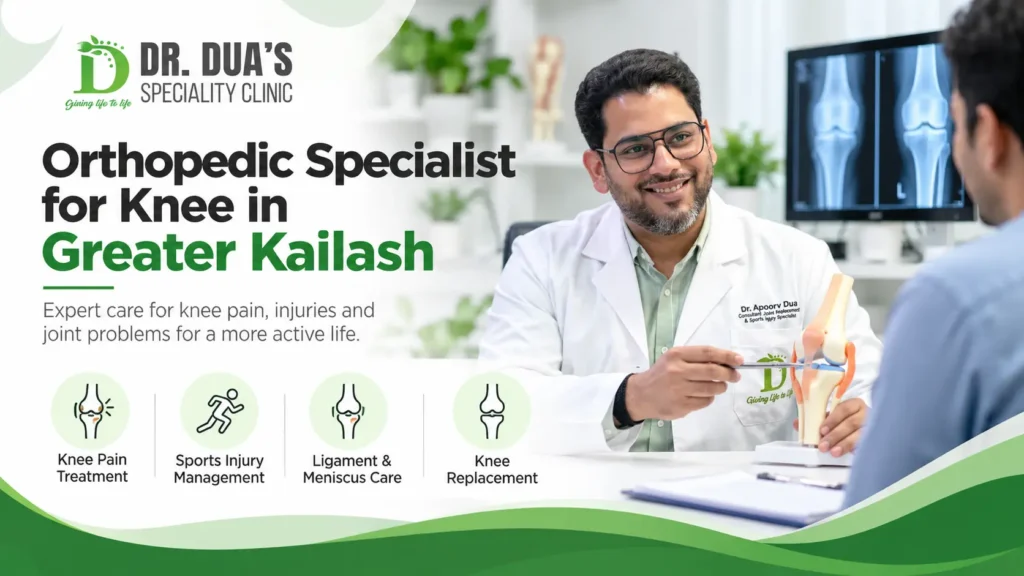
Orthopedic Specialist for Knee in Greater Kailash: A Guide to Knee Pain and Treatment
Knee pain can make everyday activities difficult. Walking, climbing stairs, exercising, or standing for long periods may become uncomfortable. If the pain continues or affects your mobility, consulting an orthopedic specialist for knee in Greater Kailash can help you understand its cause and explore suitable treatment options.
Knee problems can develop because of arthritis, sports injuries, ligament damage, meniscus tears, or age-related changes in the joint. The right treatment depends on the diagnosis, the severity of symptoms, your activity level, and your overall health.
At Dr. Apoorv Dua’s Speciality Clinic in Greater Kailash II, patients can seek orthopaedic evaluation for knee pain, joint problems, sports injuries, and conditions that may require surgical or non-surgical treatment.
When Should You Consult a Knee Specialist?
Occasional discomfort after physical activity may improve with rest. However, persistent or recurring knee pain deserves medical attention, particularly when it interferes with your daily routine.
Consider consulting an orthopaedic specialist if you experience:
- Pain while walking, standing, or climbing stairs.
- Swelling or stiffness around the knee joint.
- Difficulty bending or straightening your knee.
- A feeling that your knee may give way.
- Pain after a fall, twist, or sports injury.
- Clicking or locking accompanied by pain or restricted movement.
- Knee pain that continues despite initial care.
Sudden severe pain, a visibly deformed knee, a hot and swollen joint with fever, or an inability to bear weight requires prompt medical assessment.
Common Causes of Knee Pain
Understanding the possible cause of knee pain is an important step towards choosing appropriate treatment. Different conditions can produce similar symptoms, so a clinical examination is essential.
1. Knee Osteoarthritis
Osteoarthritis develops when the tissues within a joint undergo gradual changes over time. It can cause pain, stiffness, swelling, and reduced movement. Symptoms may become more noticeable after walking or standing for extended periods.
Treatment may include activity modification, strengthening exercises, physiotherapy, appropriate medication, and other options based on the individual’s condition. Joint replacement may be considered when severe symptoms continue to affect quality of life despite suitable non-surgical treatment.
2. ACL and Other Ligament Injuries
Ligaments help stabilise the knee. A sudden change of direction, awkward landing, or sports-related twist can injure the anterior cruciate ligament (ACL) or other supporting structures.
Symptoms may include swelling, pain, instability, and difficulty returning to sports. Treatment depends on the extent of the injury, associated damage, activity goals, and knee stability. Some injuries can be managed with rehabilitation, while others may require ligament reconstruction.
Learn more about ACL and PCL surgery and discuss the appropriate treatment options during a consultation.
3. Meniscus Tears
The meniscus is a cartilage structure that helps distribute loads within the knee. A tear may occur during a twisting injury or alongside age-related changes.
Patients may experience pain, swelling, catching, or difficulty moving the knee fully. Treatment varies according to the tear’s location, pattern, symptoms, and the patient’s overall joint health. Selected tears may benefit from meniscus repair, while others can improve with non-surgical management.
4. Sports-Related Knee Injuries
Running, jumping, football, gym workouts, and other physical activities can place stress on the knee. Injuries may affect ligaments, tendons, cartilage, or surrounding tissues.
An appropriate assessment helps identify the injured structure and determine when it is safe to resume activity. Returning to sport too early may increase the risk of further injury.
What Does an Orthopedic Specialist Do During a Knee Evaluation?
A knee consultation begins with understanding your symptoms and how they affect daily life. The specialist may ask when the pain started, whether an injury occurred, which movements make it worse, and whether you have experienced swelling or instability.
The evaluation may include:
- Medical history: Reviewing symptoms, previous injuries, treatments, and relevant medical conditions.
- Physical examination: Assessing tenderness, swelling, range of motion, alignment, and joint stability.
- Imaging: X-rays or MRI scans may be recommended when clinically appropriate.
- Treatment planning: Discussing suitable options based on the findings, your goals, and your preferences.
Not every patient needs an MRI or surgery. Investigations should be selected according to the suspected condition and examination findings.
Knee Pain Treatment: Surgical and Non-Surgical Options
An experienced knee specialist considers the least invasive appropriate treatment before recommending surgery, whenever clinically suitable.
Non-Surgical Treatment
Depending on the diagnosis, treatment may include:
- Temporary modification of activities that aggravate symptoms.
- Physiotherapy and targeted strengthening exercises.
- Weight management when excess body weight contributes to joint stress.
- Appropriate pain-relief medication prescribed after considering individual risks.
- Selected injection therapies when indicated.
These treatments aim to reduce symptoms, improve function, and support mobility. Their effectiveness depends on the underlying condition and individual response.
Knee Arthroscopy and Ligament Reconstruction
Knee arthroscopy uses small incisions and a camera to examine or treat selected problems inside the joint. It may be appropriate for certain injuries, including specific meniscus tears.
ACL or other ligament reconstruction may be considered when instability, injury characteristics, and activity requirements justify surgery. The decision should follow a detailed assessment rather than symptoms alone.
Knee Replacement Surgery
Knee replacement may be an option for advanced arthritis or significant joint damage when pain and functional limitations remain substantial despite appropriate conservative care.
A specialist evaluates the extent of joint damage, overall health, mobility goals, and potential risks before discussing surgery. Recovery usually involves a planned rehabilitation programme, with progress varying between patients.
Read more about joint replacement treatment to understand the available options.
Choosing an Orthopedic Specialist for Knee in Greater Kailash
Selecting a knee specialist involves more than searching for a clinic nearby. Consider the following factors before making your decision.
Relevant qualifications and experience: Check the doctor’s orthopaedic training and experience in treating your particular knee condition.
Accurate diagnosis: A suitable treatment plan should be based on your symptoms, examination, and relevant investigations.
Clear treatment explanations: Your doctor should explain the expected benefits, limitations, possible risks, and alternatives to a recommended procedure.
Rehabilitation planning: Recovery may require physiotherapy, home exercises, and gradual changes in activity. Ask how follow-up care will be coordinated.
Individualised care: Your age, activity level, medical history, and personal goals should inform treatment decisions.
These factors can help you make a more informed choice and understand what to expect throughout treatment.
Meet Dr. Apoorv Dua in Greater Kailash II
Dr. Apoorv Dua is an orthopaedic surgeon whose listed areas of practice include joint replacement, ligament reconstruction, arthroscopic procedures, and sports injury treatment. His published qualifications include MBBS, MS in Orthopaedics, and fellowships in joint replacement and ligament reconstruction.
At Dr. Dua’s Speciality Clinic, patients can seek an assessment for knee pain, ligament injuries, meniscus problems, arthritis, and conditions that may require joint replacement.
The treatment approach depends on the patient’s diagnosis and clinical needs. A consultation can help clarify the cause of symptoms and identify appropriate next steps.
Clinic address: Dr. Dua’s Speciality Clinic, M-85, 80 Feet Road, Block M, Greater Kailash II, New Delhi, Delhi 110048.
Phone: +91 90343 33133
Visit the official Dr. Apoorv Dua website for further information and appointment enquiries.
Frequently Asked Questions
Which doctor should I consult for knee pain in Greater Kailash?
An orthopaedic specialist with experience in knee conditions can assess persistent pain, arthritis, ligament injuries, and meniscus problems. The appropriate specialist depends on your symptoms and suspected diagnosis.
Can knee pain improve without surgery?
Yes. Many knee conditions can be managed without surgery through appropriate activity modification, physiotherapy, medication, and other selected treatments. The best approach depends on the cause and severity of the problem.
When is knee replacement necessary?
Knee replacement may be considered when advanced joint damage causes significant pain and disability despite appropriate non-surgical treatment. A specialist can assess whether it is suitable for your situation.
Do I need an MRI for knee pain?
Not always. Your doctor may recommend an X-ray, MRI, or no imaging initially, depending on your history and examination. The choice of investigation should be clinically justified.
How can I book a knee consultation in Greater Kailash?
You can contact Dr. Dua’s Speciality Clinic at +91 90343 33133 to enquire about appointments and consultation availability.
Take the Next Step Towards Better Knee Health
Persistent knee pain should not be ignored, particularly when it limits walking, exercise, sleep, or everyday activities. Early assessment can help identify the underlying problem and clarify suitable treatment options.
If you are looking for an orthopedic specialist for knee in Greater Kailash, arrange a consultation to discuss your symptoms, understand your diagnosis, and make an informed decision about your care.
