

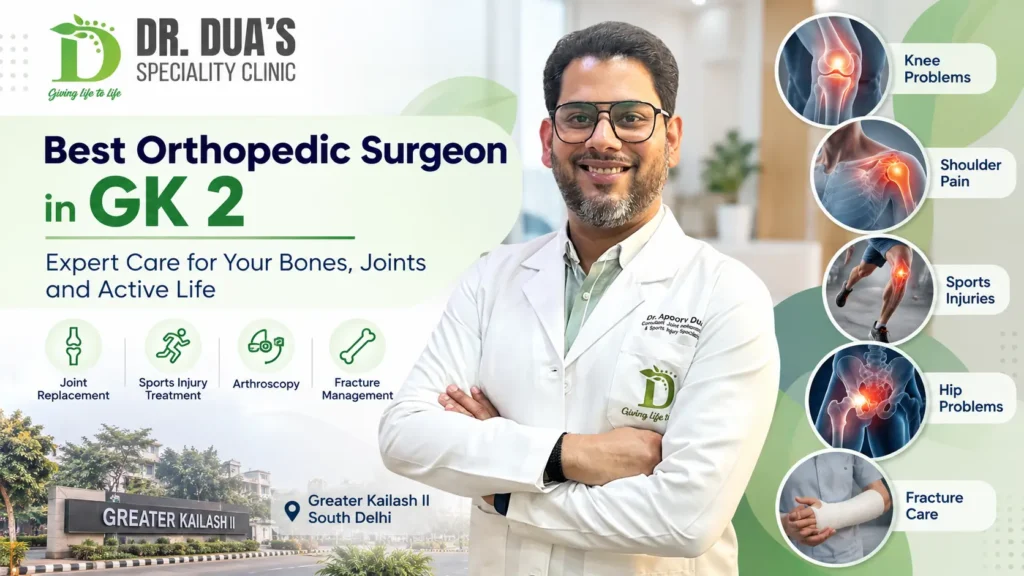
Best Orthopedic Surgeon in GK 2
Knee pain that makes climbing stairs difficult, a shoulder that hurts at night, or a sports injury that keeps you away from your usual activities can affect everyday life in unexpected ways. When these problems persist, getting the right medical advice becomes important.
If you are looking for the best orthopedic surgeon in GK 2, Delhi, it is worth taking the time to understand your options. Online ratings may help you discover a doctor, but qualifications, relevant experience, clear communication and an appropriate treatment plan matter just as much.
Dr. Apoorv Dua practises orthopedics in Greater Kailash II, South Delhi, with areas of practice including joint replacement, sports injuries, arthroscopy and fracture management. This guide explains common orthopedic problems and what to consider when choosing a specialist for your needs.
Why Choosing the Right Orthopedic Surgeon Matters
Orthopedic care covers conditions affecting bones, joints, muscles, ligaments and tendons. Some problems develop gradually, such as joint pain associated with osteoarthritis. Others begin suddenly after a fall, an accident or a sports injury.
The right approach depends on the cause of the problem, its severity, your medical history and how it affects your everyday activities. An orthopedic consultation can help you understand what may be happening and whether further tests are necessary.
During your appointment, you may discuss:
- The possible cause of your pain, stiffness or restricted movement.
- Whether an X-ray, MRI or another investigation is appropriate.
- Non-surgical treatments and when surgery may be considered.
- Rehabilitation, recovery and follow-up care.
- Practical ways to protect your joints and maintain mobility.
Not every orthopedic condition requires surgery. Depending on the diagnosis, treatment may begin with activity modification, medication prescribed by a doctor, physiotherapy or other suitable non-surgical measures.
Dr. Apoorv Dua: Orthopedic Care in Greater Kailash II
When choosing an orthopedic specialist, patients should review the doctor’s qualifications, clinical experience and areas of practice. These details can help you decide whether the specialist is suitable for your particular concern.
You can learn more about Dr. Apoorv Dua’s professional profile before arranging a consultation.
It is also worth preparing a few questions for your appointment. Ask about the possible diagnosis, available treatments, the expected recovery process and any risks associated with the recommended approach. A clear discussion helps you make an informed decision about your care.
Common Orthopedic Conditions That May Need Medical Attention
1. Knee Pain and Arthritis
Knee pain can develop for several reasons, including osteoarthritis, ligament injuries, inflammation and other joint conditions. Some people notice discomfort when walking or climbing stairs, while others experience stiffness after sitting for a long time.
Treatment depends on the underlying cause and how much the condition affects movement. A doctor may recommend physiotherapy, activity changes, medication or other appropriate measures. For some patients with advanced joint damage, knee replacement may be considered.
If knee pain is affecting your mobility, explore the available knee replacement treatment options.
2. Sports Injuries and Ligament Tears
Sports injuries are not limited to professional athletes. A sudden twist, an awkward landing or a collision during physical activity can damage the ligaments or other structures around a joint.
Symptoms may include pain, swelling, difficulty bearing weight or a feeling that the knee is unstable. The severity of the injury needs to be assessed before deciding on treatment.
Some injuries can be managed with rehabilitation and activity modification. Others may require surgery, depending on the structures affected and the patient’s activity needs.
Read more about ACL surgery in Delhi and sports injury treatment.
3. Shoulder Pain and Restricted Movement
Shoulder pain can interfere with dressing, lifting objects, working at a desk or sleeping comfortably. Possible causes include rotator cuff injuries, frozen shoulder, tendon problems and arthritis.
Pain when raising the arm, difficulty reaching overhead or persistent discomfort at night may warrant an assessment, particularly when symptoms do not improve.
Treatment varies according to the diagnosis. Some conditions respond to physiotherapy and other non-surgical measures, while selected injuries may require an arthroscopic procedure or joint replacement.
Learn more about frozen shoulder treatment and shoulder replacement surgery.
4. Hip Pain and Difficulty Walking
Hip pain can make walking, climbing stairs and getting up from a chair uncomfortable. It may be associated with arthritis, an injury or another condition affecting the joint or surrounding tissues.
An orthopedic assessment can help identify the possible cause and determine which treatments may be appropriate. Depending on the diagnosis, care may involve non-surgical measures or, in selected cases, hip replacement surgery.
For further information, visit the page on hip replacement surgery in Delhi.
5. Fractures and Accidental Injuries
Falls, road accidents and sports-related incidents can cause fractures and other injuries. The appropriate treatment depends on the affected bone, the pattern of the fracture and the severity of the injury.
A suspected fracture should be assessed promptly. Avoid trying to straighten a visibly deformed limb or putting unnecessary weight on the injured area.
Severe injuries, open wounds over a suspected fracture, significant deformity or numbness and unusual coldness in a limb require urgent medical attention.
Learn more about fracture treatment in Delhi.
How to Choose an Orthopedic Surgeon in GK 2
Searching for the best orthopedic surgeon in GK 2 may bring up several doctors and clinics. Rather than relying on one ranking, consider the factors that matter for your condition.
Check Qualifications and Relevant Experience
Review the doctor’s medical qualifications, specialist training and experience with the problem you are facing. For example, a patient with a ligament injury may want to understand the surgeon’s experience in sports injuries and ligament reconstruction.
Look for Clear Communication
A consultation should give you an opportunity to explain your symptoms and ask questions. The doctor should explain the likely diagnosis, the reason for any recommended tests and the treatment options available.
Understand the Alternatives to Surgery
Surgery is not always the first step. Ask whether non-surgical treatment is appropriate for your condition, what benefits it may offer and when an operation might be considered.
Ask About Recovery and Follow-Up
Treatment does not always end with a procedure or prescription. Depending on the condition, recovery may involve physiotherapy, home exercises, activity changes and follow-up appointments. Understanding these requirements can help you plan ahead.
Consider Location and Appointment Access
For patients living or working in Greater Kailash II, Kailash Colony, Chittaranjan Park and nearby parts of South Delhi, the clinic’s location and appointment arrangements may also influence their choice.
Ultimately, the right specialist is one whose qualifications and experience are relevant to your needs and who helps you understand your treatment choices.
What Happens During an Orthopedic Consultation?
Your first appointment will usually begin with questions about your symptoms, when they started and which activities make them better or worse. The doctor may also ask about previous injuries, existing medical conditions, medicines and treatments you have already tried.
A physical examination may be used to assess movement, tenderness, swelling, strength and joint stability. Depending on the suspected condition, the doctor may recommend imaging or other tests. Not everyone needs an X-ray or MRI.
Once the findings have been reviewed, the doctor can explain the likely diagnosis and discuss suitable next steps. If surgery is being considered, ask about the potential benefits, risks, alternatives and expected rehabilitation.
Bringing previous medical reports, scan results and a list of your current medicines can help make the consultation more useful.
When Should You See an Orthopedic Specialist?
Consider arranging a medical assessment if joint pain persists, swelling keeps returning, movement becomes restricted or symptoms begin affecting your everyday routine. Repeated sports injuries and difficulty walking also deserve attention.
Seek urgent medical care after a serious injury, particularly if you cannot bear weight, have a visible deformity or have an open wound over a suspected fracture. A limb that becomes cold, pale, numb or unusually weak also requires urgent assessment.
Do not delay emergency treatment while trying to arrange a routine clinic appointment.
Orthopedic Consultation in Greater Kailash II, South Delhi
If you are searching for an orthopedic surgeon in GK 2 for knee pain, hip problems, shoulder conditions, sports injuries or fractures, reviewing the doctor’s professional profile is a useful starting point.
You can find more information about Dr. Apoorv Dua through his orthopedic surgeon profile. For appointment enquiries, visit the contact and appointment page.
You can also review the clinic’s patient testimonials for additional context about patient experiences. Individual experiences and treatment outcomes vary, so discuss your own condition and expectations directly with the doctor.
Frequently Asked Questions
How do I find the best orthopedic surgeon in GK 2?
Start by reviewing the doctor’s qualifications, relevant experience, areas of practice and approach to explaining treatment options. Patient reviews may offer additional context, but they should not be the only factor in your decision.
What conditions does an orthopedic surgeon treat?
Orthopedic surgeons diagnose and treat conditions affecting bones, joints, ligaments, muscles and tendons. These may include arthritis, fractures, sports injuries, ligament tears and joint problems.
Does knee or shoulder pain always require surgery?
No. Treatment depends on the diagnosis and severity of the condition. Many problems can initially be managed with appropriate non-surgical care, while surgery may be considered in selected cases.
When should I seek medical advice for joint pain?
Consider an assessment if pain persists, movement becomes difficult, swelling recurs or symptoms interfere with normal activities. Severe pain or a significant injury may require urgent care.
How can I prepare for an orthopedic appointment?
Write down your symptoms, when they began and what makes them worse. Bring relevant medical reports, previous scan results and a list of current medicines. Prepare questions about the diagnosis, treatment choices and recovery.
Where can I enquire about an appointment with Dr. Apoorv Dua?
You can visit the contact and appointment page to check the clinic’s current contact details and appointment arrangements.
Final Thoughts
Orthopedic problems can affect everyday activities in ways that are easy to underestimate. Persistent knee pain, shoulder stiffness, a sports injury or difficulty walking should not be ignored when symptoms continue or worsen.
If you are considering orthopedic care in Greater Kailash II, take time to review the doctor’s qualifications, understand your treatment options and ask questions during your consultation. A clear diagnosis and an appropriate treatment plan can help you make informed decisions about your joint health.
